Home Exercises for Beginners Who Hate Gyms: A Practical Guide
Quick Summary: Home workouts for beginners don’t require gym memberships, expensive equipment, or even much space. This guide shows you how to start exercising at home using what you already have, from walking and stairs to cheap resistance bands and bodyweight exercises. If gyms intimidate you or don’t fit your life, home workouts for beginners offer a practical, sustainable alternative that actually works.
The Problem With Gyms (And Why You’re probably Not Wrong to Avoid Them)
You’re standing in the gym doorway, stomach tight, palms sweaty. Everyone else moves with purpose – grabbing weights, adjusting machines, looking like they belong here. You don’t.
You scan the room for the easiest, least-visible spot. Maybe that treadmill in the corner? But then you’d have to walk past the free weights area where the serious people are. Your heart’s already racing and you haven’t even started exercising.
So you leave. Tell yourself you’ll come back on a quieter day. You won’t.
Here’s what nobody admits: gyms aren’t just expensive (£20-40 a month before the joining fee you can’t escape). They’re not just inconvenient (getting changed, packing a bag, travelling there, showering in a questionable cubicle, travelling back – that’s a 90-minute commitment, not a 30-minute workout).
They’re not for everyone. And you’re probably not wrong to avoid them if they make you feel uncomfortable.
But everywhere you look, the message is clear – if you want to get fit, you need a gym membership.
The gym membership you’re “definitely going to get next month” never materializes. Or it does, and you use it religiously for three weeks before life gets in the way and suddenly it’s been two months and you can’t face going back because everyone will judge you for disappearing.
Meanwhile, your health doesn’t pause while you’re waiting for the perfect moment or the perfect solution. Your energy stays low. Your fitness stays where it is. The gap between where you are and where you want to be just gets wider.
You might try a fitness app. Maybe a cardio one that has you gasping for breath in your living room, hating every second, wondering why everyone else seems to find this motivating. You delete it after a week.
The truth is, you don’t need perfect. You don’t need a gym. You don’t even need to enjoy it at first. (In fact, if you’re someone who genuinely hates exercise, home workouts for beginners are often the gentler entry point that actually sticks.)
You just need to start. And you can start right now, right where you are.
The Solution Nobody Talks About: Your Home Actually Works
Two years ago, I stood in my living room at 6am in my pajamas, staring at a YouTube workout video on my phone.
The instructor was impossibly perky. “Let’s go, team! Burpees!” I did three before my lungs screamed and my legs turned to jelly. I paused the video. Tried again. Paused again. Felt like a complete failure before breakfast.
I hated it. Every gasping, sweaty second of it.
But here’s what I learned that morning, and in the messy months that followed: home exercise isn’t the consolation prize. It’s not what you do until you can afford a gym. For regular folk with actual lives, it’s often the better option.
That cardio app? Deleted within a week. But then I found a yoga app that didn’t make me want to cry. Yoga still isn’t “my thing” but I do it a couple of times a week because the health benefits are genuinely brilliant. Now I use dumbbells and resistance bands at home, and honestly? It works better than any gym membership ever did.
And you can start with literally nothing.
Home Workouts for Beginners: What You Actually Need (Spoiler: Probably Less Than You Think)
If you have zero budget:
Your body (bodyweight exercises work)
Your stairs (free stepper machine)
The pavement outside (walking is genuinely foundational)
A couple of tins from your cupboard (surprisingly effective weights)
If you have £10-20:
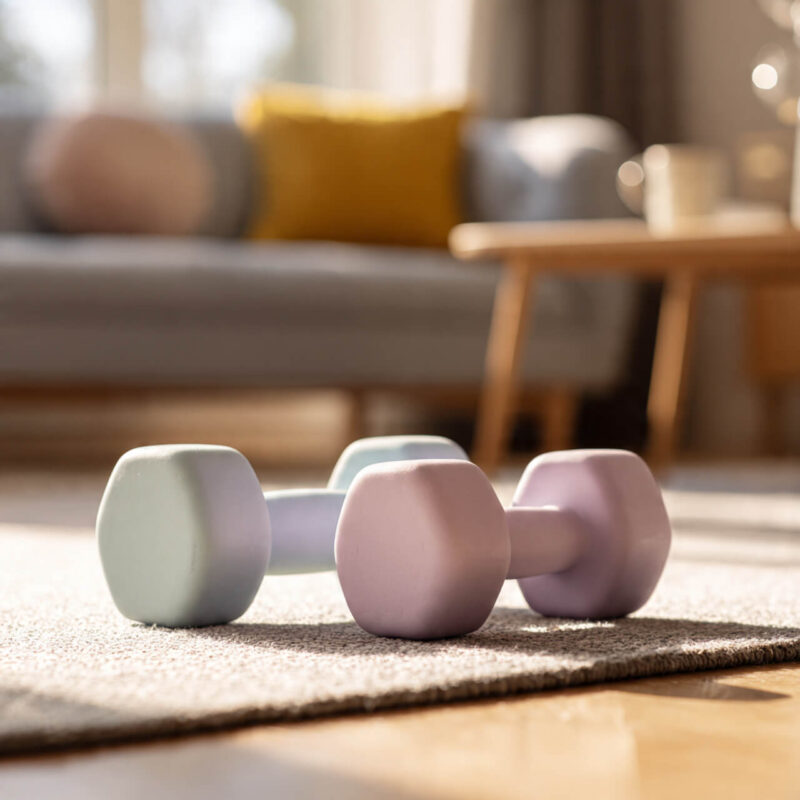
One set of light dumbbells (2-5kg to start)
Resistance bands (around £8 and incredibly versatile)
Check Facebook Marketplace – people sell barely-used equipment for pennies
If you want structured guidance:
Free YouTube channels (thousands of them)
Free apps (even the ones that don’t suit you teach you something)
Walking programs (completely free, just need trainers)
I started with apps and my own stairs. The resistance bands I bought for less than a tenner are still in my routine two years later.
You just need to start with something, not everything.
“Home exercise isn’t the consolation prize – for regular folk with actual lives, it’s often the better option especially for beginners.”
Building Your Home Workout Routine (No Gym Required)
If you’re completely new to exercise, start with five minutes. Literally just five. That’s it. One walk around the block. Five minutes of following a YouTube video. A few trips up and down your stairs. The goal isn’t to exhaust yourself – it’s to prove to yourself that you can do this. (And if you’re starting exercise when overweight, this gentle approach is even more important – build the habit first, intensity comes later.)
Then tomorrow, do it again. And the day after. Build the habit first, extend the time later.
Choose something you can actually stick to. This is critical. If you hate it, you probably won’t continue. Try different things. Walking might be your thing. Resistance bands might click or yoga might surprise you. Or none of those, and something else entirely. The point is to find what doesn’t make you want to fake your own death to avoid doing it.
You’re building a new identity here. Every time you show up – even for five minutes, even half-heartedly – you’re becoming someone who exercises. Not someone who’s “trying to get fit” or “planning to start properly soon.” Someone who actually does it.
That identity builds slowly. Five minutes today. Five minutes tomorrow. Then maybe seven minutes next week. Then ten. Before you know it, you’re someone who moves their body regularly, and that person makes different choices than the person who doesn’t.
Stick with it. The identity matters more than the intensity.
Progress when you’re ready, not when some plan tells you to. When walking feels easy, walk further or faster. If the tins start to feel too light, buy a cheap set of dumbbells or resistance bands. If bodyweight exercises feel manageable, add more reps. There’s no timeline except yours.
Pause & Reflect –What’s the smallest possible step you could take today? Not tomorrow, not next week – today. Could you walk around the block? Do ten squats in your kitchen? Spend five minutes on YouTube finding a video that doesn’t make you want to punch the screen?
The Exercises That Actually Work at Home
Walking: Seriously, this is your foundation. 20-30 minutes, most days. Outside is better for your head, but even walking around your house counts when weather’s grim.
Stairs: Walk up and down at a steady pace. Start with 5 minutes. Brilliant for legs and cardio without looking like a workout video.
Squats: Bodyweight to start. Lower yourself like you’re sitting in a chair, stand back up. Do them while the kettle boils.
Press-ups: On your knees if full ones are too hard. Nobody’s watching – modify however you need to.
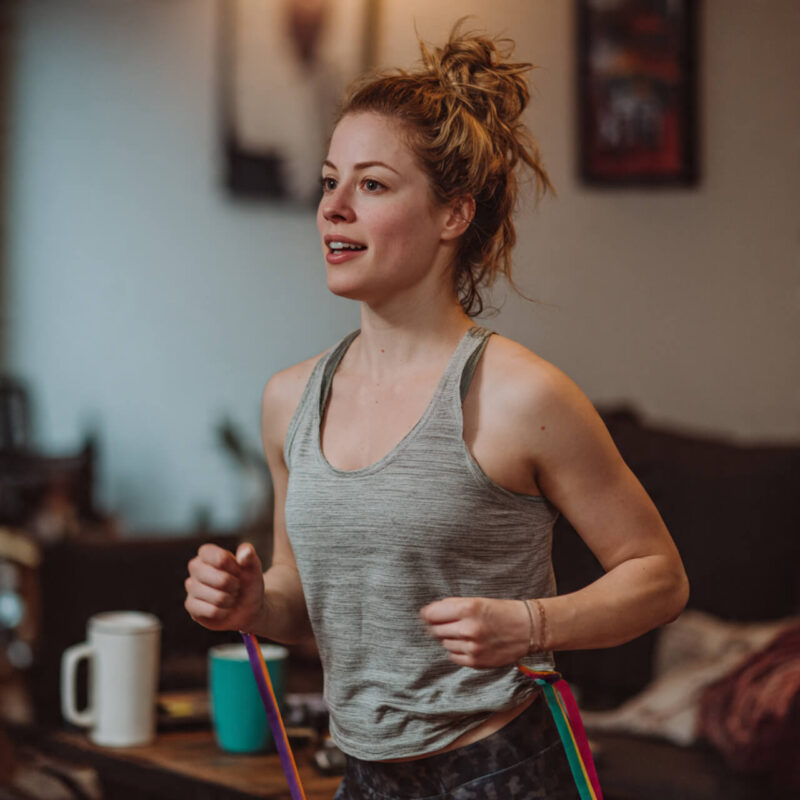
Resistance band work: Pull them apart for shoulders, step on them and pull up for arms, loop them round your legs for resistance. £8 and endless variations.
Dumbbell basics: Bicep curls, shoulder presses, bent-over rows. Start with 2-3kg (or tins). You can find form videos on YouTube in about 30 seconds.
Yoga or stretching: Even if it’s not your thing, twice a week does wonders for flexibility and stops you feeling like a rusty robot. The health benefits are genuinely worth the slight awkwardness of following a video in your living room.
You don’t need to do all of these. Pick two or three. Do them consistently. Add more when you’re ready.
“You don’t need to buy everything at once, or need the ‘right’ equipment. You just need to start with something.”
Making It Stick (The Boring Bit That Actually Matters)
Here’s the truth nobody wants to hear: motivation fades. That burst of enthusiasm you feel right now? It’ll be gone by Thursday.
What works is systems. Small, stupid-simple habits that don’t rely on feeling motivated. This is the same principle behind weight loss without willpower – you build systems that work even when you don’t feel like it.
Habit stack it: After your morning coffee, do ten squats. After you brush your teeth at night, do press-ups. Link it to something you already do without thinking.
Make it so easy you can’t say no: Five minutes counts. One exercise counts. Walking to the end of your road counts. You can always do more once you start, but you need to actually start.
Track it somehow: Tick a calendar, note it in your phone, tell someone. Seeing a streak builds momentum. Breaking a streak feels rubbish enough that you’ll fight to keep it going.
Don’t aim for perfect: Missed a day? Fine. Start again tomorrow. Did a shorter workout than planned? Still counts. The goal isn’t perfection – it’s consistency over time.
I didn’t transform my fitness by being perfect. I did it by showing up most days, even when the workout was short or half-hearted, even when I really didn’t fancy it. The NHS recommends at least 150 minutes of moderate activity per week – but that’s built up gradually, not achieved overnight.
Pause & Reflect: Think about your current daily routine. Where’s the natural gap where movement could fit? Not where you “should” exercise, but where it would actually be easiest to slot something in without derailing your entire day?
Mr Critic Moment:
” Well you are going to look stupid doing yoga in the living room”
Quiet that inner critic I mean come one who’s watching? Your cat?
The Bottom Line
You don’t need a gym to get fit, or expensive equipment, perfect knowledge, or massive amounts of time.
The key is to start small, stay consistent, and build from where you actually are instead of where you think you should be.
Here’s your choice right now:
Choice 1: Close this tab. Tell yourself you’ll start Monday when you have more time, more energy, more motivation. Watch Monday come and go like it always does.
Choice 2: Stand up. Walk to the end of your street and back. Or do ten squats in your kitchen. Or spend five minutes finding one YouTube workout video that doesn’t make you want to scream. That’s it. Just one tiny action today.
Your home works. Your stairs work. Walking works. A cheap set of resistance bands works. Apps you try and delete work (even if only to teach you what you don’t like).
The only thing that definitely doesn’t work is waiting for perfect conditions that never arrive.
Which choice are you making?
3 Everyday Mastery Steps You Can Take Now
Start With Five Minutes Today Choose one exercise from this post – a walk around the block, squats while the kettle boils, or trips up and down your stairs. Set a timer for five minutes. That’s it. Prove to yourself you can do this.
Pick Your Equipment (Or Don’t) Decide right now: bodyweight only, or will you invest £8 in resistance bands? You don’t need everything – you need to commit to something. Write down what you’re starting with.
Stack It To Something You Already Do Link your five-minute workout to an existing habit. After morning coffee? Before your evening shower? After brushing your teeth? Write it down: “After [existing habit], I will [exercise for 5 minutes].” Grab my Habit Stacking Worksheet for a step-by-step system.)
Journaling Prompts:
Whats actually stopping me from starting?
What does excercise look like to me?
Dont forget to join the free Everyday Mastery newsletter calm, practical insights to help you build small daily wins that last.
If you enjoy these posts and want to support the writing, you can buy me a coffee it keeps the kettle (and the ideas) warm.
As always if i can support you in anyway just reach out to me, you got this – Kel x
This is your permission slip to start messy. We don’t chase perfect here – we practice progress, because that’s Everyday Mastery.
Frequently Asked Questions
Do I need equipment for home workouts for beginners? No. You can start with bodyweight exercises, walking, and using your stairs. Tins from your cupboard work as light weights. If you want to invest, resistance bands (around £8) are the cheapest, most versatile option.
What’s the easiest exercise for complete beginners? Walking. It’s free, low-impact, requires no instruction, and builds the habit of moving your body without the pressure of “proper” exercise.
How long should I exercise at home as a beginner? Start with 5 minutes. Seriously. Build the habit first, extend the time later. Five minutes daily beats zero minutes while you wait for the perfect 30-minute slot.
Can I really get fit without going to a gym? Yes. Home workouts for beginners using bodyweight, resistance bands, and dumbbells are genuinely effective. Consistency matters more than equipment.
What if I hate exercise? Try different things until you find what you don’t hate. Not everyone likes cardio. Not everyone likes yoga. The key is finding movement that feels tolerable enough to stick with.
Kel is the writer behind Everyday Mastery, where she shares the real, messy, and meaningful process of building habits, resilience, and self-belief from the ground up. Her writing blends ancient philosophy with modern science, always focused on small, practical steps that lead to lasting
Websites store cookies to enhance functionality and personalise your experience. You can manage your preferences, but blocking some cookies may impact site performance and services.
Essential cookies enable basic functions and are necessary for the proper function of the website.
Name
Description
Duration
Cookie Preferences
This cookie is used to store the user's cookie consent preferences.