50 Practical Bridge Affirmations to Silence Your Inner Critic
Read time: 14 minutes
The Real Reason Affirmations Haven’t Worked for You
You’ve repeated bridge affirmations hundreds of times, hoping they’d finally silence that critical voice in your head. But instead of feeling better, you end up arguing with yourself in the mirror.
That voice, the one that says you’re not enough, that rolls its eyes when you try to be kind to yourself — never seems to go away. The more you try to fight it with positivity, the louder it gets. You start wondering if affirmations even work… or if you’re just doing them wrong.
The truth? It’s not you, it’s the affirmations. They fail because they ignore how your brain actually works. What you need isn’t blind positivity. You need a bridge — something believable enough for your mind to accept, even on bad days.
That’s what this post is about: Bridge Affirmations — gentle, realistic statements that quiet your critic instead of arguing with it. By the end, you’ll have 50 affirmations that actually work, even when self-love feels impossible.
Quick Summary:
Traditional affirmations often fail because they ignore your emotional reality. These 50 positive bridge affirmations meet you where you are, from crisis mode to confident growth — with realistic, compassionate self-talk that actually works.
If This Sounds Like You, You’re in the Right Place
Maybe you’ve tried affirmations before. They made you feel worse, not better. You stood in front of the mirror saying “I love myself” while your inner critic laughed back.
Perhaps you’ve spent years listening to a voice that says:
You’re not good enough.
Everyone else has it figured out except you.
You’re falling behind and running out of time.
You should be further along by now.
Your body, work, or relationships are never quite right.
Maybe you’re tired of self-help that demands you “just think positive.” Meanwhile, it ignores how hard this actually is.
This post isn’t about pretending everything is fine or forcing yourself to believe things that feel like lies. It’s about realistic bridge affirmations — gentle, believable steps toward a kinder inner dialogue. No toxic positivity. No fake leaps. Just small, consistent truths that work.
I remember standing in front of the mirror once, repeating “I love myself” and feeling ridiculous. My critic didn’t get quieter — it got louder. That’s when I realised the problem wasn’t the words; it was the gap between them and what I actually believed. Bridge affirmations were the first time I felt like I could talk back and be honest at the same time.
Short answer: They try to jump too far ahead of what you can believe right now.
When you’re in pain, saying “I love myself unconditionally” can make you feel worse. Your critic fires back instantly: “No you don’t.” That’s because those kinds of affirmations create a huge gap between where you are and where you think you should be.
The result? More guilt, more frustration, and one more thing to “fail” at.
Bridge affirmations work differently. They meet you where you are, then build a believable path forward.
For a deeper look at how your inner dialogue forms and why some people’s minds sound harsher than others, read The Truth About Inner Monologue →.
Why Do Viral Affirmations Backfire?
You’ve seen the trending lines on TikTok and Instagram:
“I am worthy of unlimited abundance.” “My dream life manifests effortlessly.” “I am confident, beautiful, and unstoppable.”
They get millions of likes. But for anyone with a harsh inner critic, they backfire. They’re too big a leap. Your critic calls them lies, and the backlash makes you feel even worse.
That’s why bridge affirmations are growing fast in 2025 — they don’t ask you to fake confidence. They help you build it.
❌ Viral affirmation: “I am confident and successful.” ✅ Bridge affirmation: “I’ve handled hard things before.”
One your brain rejects. The other it can accept.
Mindful Social Media Use (So Your Critic Stays Quiet Online)
The more you scroll, the louder your critic gets. Social platforms reward comparison, not compassion. Before you open an app, try saying: “I choose to look for ideas, not proof that I’m behind.”
Follow accounts that make you feel grounded, not guilty. Mute the ones that trigger your critic. That’s digital self-care — not avoidance.
If you want to explore how social media shapes thought patterns, the Why Motivation Fails (Non-Negotiable Method) → post explains how to rebuild consistency and calm focus in a distracted world.
What Are Bridge Affirmations?
Bridge affirmations are statements that feel true enough to believe right now. They shift your inner dialogue gradually — from harsh to neutral, then to kind.
When your critic screams “You’re a failure,” jumping to “I’m amazing” feels impossible. But saying “I’m doing my best with what I have today” is believable. That’s your bridge.
Quick Reframe Practice: When your critic says, “I always mess things up,” add: “That’s just a thought — not a fact.” That tiny pause helps your brain step back and choose a new bridge statement.
Traditional vs Bridge Affirmations
Traditional Affirmation
What Your Critic Says
Bridge Affirmation
Why It Works
“I love myself unconditionally.”
“No you don’t.”
“I’m learning to be kind to myself.”
Acknowledges the journey
“I am confident and successful.”
“You’re a fraud.”
“I’ve handled hard things before.”
Based on real evidence
“I am beautiful inside and out.”
“You’re disgusting.”
“My body is trying to keep me alive.”
Focuses on function, not appearance
“I always make great decisions.”
“You mess everything up.”
“I trust myself to figure things out as I go.”
Allows for growth
“I’m perfect just as I am.”
“You’re nowhere near good enough.”
“I’m doing my best with what I have today.”
Realistic and achievable
Small, believable steps > giant, fake leaps.
How Do Affirmations Change Your Brain?
Brain scans show self-affirmation activates regions linked to self-value and emotional balance — the medial prefrontal cortex and ventral striatum. According to Dr. Kristin Neff, “Self-criticism activates the threat-defence system, whereas self-compassion activates the care-giving system.”
Over 2–4 weeks of repetition, you strengthen neural connections in positive networks and quiet the amygdala (the fear centre). Studies, including a 2025 Scientific Reports study, confirm that self-compassion reduces distress and rewires default thought patterns.
As therapist Kati Morton says, “You can’t hate yourself into becoming someone you love.” Bridge affirmations prove that — compassion creates change faster than criticism ever could.
“You don’t have to believe affirmations for them to work — your brain is rewiring with every repetition.”
If fear of change keeps you stuck in the same loops, you’ll find practical tools in How to Overcome Fear of Change →. It explains why resistance appears and how to move through it calmly.
How Should You Practice These Affirmations?
Choose based on your emotional state:
Crisis Mode or C-M: For moments when your critic is loudest.
Neutral Ground: For building daily self-compassion.
Growth Mode: For expanding confidence when you feel steady.
Quick Answer: You don’t need to force belief. Say them out loud, repeat them when your critic starts its usual routine, and keep going. Repetition builds trust faster than belief.
50 Practical Bridge Affirmations to Silence Your Inner Critic
Category 1: When Your Critic Is Screaming (Crisis Mode)
These affirmations create breathing room when you’re overwhelmed and your critic won’t shut up.
For Intense Self-Criticism:
I’m allowed to make mistakes—everyone does.
This feeling will pass, even if it doesn’t feel like it right now.
I’m doing my best with what I have today.
It’s okay that I’m struggling—that doesn’t make me broken.
My inner critic is trying to protect me, but it’s overreacting.
For Comparison Spirals:
Other people’s highlight reels aren’t my reality.
I don’t need to be perfect to be worthy.
Someone else’s success doesn’t diminish mine.
I’m on my own timeline, and that’s okay.
Comparing my chapter three to someone’s chapter twenty isn’t fair to me.
Category 2: Body Image & Self-Acceptance
These help you move from harsh criticism to neutral observation. Eventually, you reach genuine appreciation.
Body image is one of the most common targets for the inner critic. If you’re struggling with persistent body criticism, you might also benefit from understanding how your internal dialogue shapes your relationship with your body. Learning about the truth about inner monologue can help you recognise when your thoughts about your body are coming from Mr Critic rather than reality.
In the UK, rates of body dissatisfaction and eating disorders have risen significantly, with self-criticism playing a central role. The NHS reports increasing numbers of people seeking support for body image issues, particularly among young women where rates of self-harm related to appearance concerns have tripled since 1993.
C-M (When You’re Hating Your Body):
My body is trying its best to keep me alive today.
I don’t have to love my body today—I just need to stop attacking it.
My worth isn’t determined by my weight or appearance.
Bodies change—that’s normal, not a personal failure.
I can be kind to my body even when I don’t like how it looks.
What this looks like: You catch yourself criticising your body in the mirror. Instead of the usual spiral, you interrupt: “My body is trying its best to keep me alive today.” It sounds weird the first time. By the fiftieth time, it starts to feel true.
Neutral (Building Acceptance):
My body does so much for me, even when I’m not paying attention.
I’m grateful my body lets me walk, hug, laugh, and breathe.
What my body looks like matters less than what it lets me experience.
I’m working on being gentle with my body—that’s enough for today.
My body deserves care, not punishment.
growth (Moving Toward Appreciation):
I’m learning to appreciate my body for what it does, not just how it looks.
My body has carried me through hard times—it deserves respect.
I’m allowed to feel good in my skin, exactly as I am.
My body is home, and I’m making peace with it.
I choose to speak kindly about my body today.
Category 3: Work, Performance & Imposter Syndrome
Use these when your critic says you’re not good enough at what you do.
Imposter syndrome and performance anxiety often stem from an overactive inner critic. Understanding the difference between helpful internal feedback and destructive self-criticism is crucial. If you find yourself constantly questioning your competence at work, it might help to explore the truth about inner monologue to understand why your brain defaults to these thought patterns.
In Britain, workplace stress and anxiety have reached record levels. According to 2025 data from the Health and Safety Executive, approximately 875,000 workers in Great Britain reported experiencing work-related stress, depression, or anxiety. Perfectionism and self-criticism are key contributors to this crisis.
C-M (Before a Meeting or Presentation):
I’m allowed to be nervous and still show up.
Not knowing everything doesn’t mean I know nothing.
I’ve handled hard things before—I can handle this.
It’s okay to ask for help when I need it.
One mistake doesn’t erase all my competence.
What this looks like: You’re in the car before an interview. Your critic is screaming. You whisper: “I’ve handled hard things before—I can handle this.” You still walk in nervous. But you walk in. That’s what matters.
Neutral (Building Confidence):
I’m learning and growing, even when progress feels slow.
I don’t have to be the expert to contribute value.
My perspective matters, even if others disagree.
I’m qualified to be here—I earned this position.
Progress matters more than perfection.
Growth (Owning Your Expertise):
I bring unique skills and insights to this work.
I’m capable of figuring things out as I go.
I trust myself to handle challenges that arise.
I’m proud of what I’ve accomplished.
I deserve to take up space in my field.
Category 4: Relationships & Social Anxiety
Try these when your critic says you’re too much, not enough, or unlovable.
Level 1 – Crisis (When Social Anxiety Hits Hard):
Not everyone will like me, and that’s okay.
I’m allowed to set boundaries without feeling guilty.
People’s reactions to me say more about them than about me.
It’s okay to be myself, even if that makes some people uncomfortable.
I don’t have to shrink myself to make others comfortable.
What this looks like: Someone makes a passive-aggressive comment. Your old response: spiral for days. Your new response: “People’s reactions to me say more about them than about me.” You still feel the sting, but you don’t let it consume you. Progress.
I’m worthy of love and belonging, exactly as I am.
I’m learning to trust that the right people will accept me.
My needs and feelings matter in relationships.
I can disagree with people I care about and still belong.
I’m allowed to like myself, even when others don’t.
These 50 bridge affirmations are designed to meet you where you are , calm, believable statements that gently retrain your brain from self-attack to self-trust.
How Can You Start Using These Affirmations Today?
Here’s your 4-week action plan:
Week 1: Pick 3 crisis-level affirmations. Use them when your critic is loudest. It’ll feel fake—say them anyway. Week 2: Add 2 neutral affirmations. Anchor them to daily cues (coffee, commute). Week 3: Try one growth affirmation. Use it when you feel steady. Week 4: Create your own — tailor them to your critic’s favourite attacks.
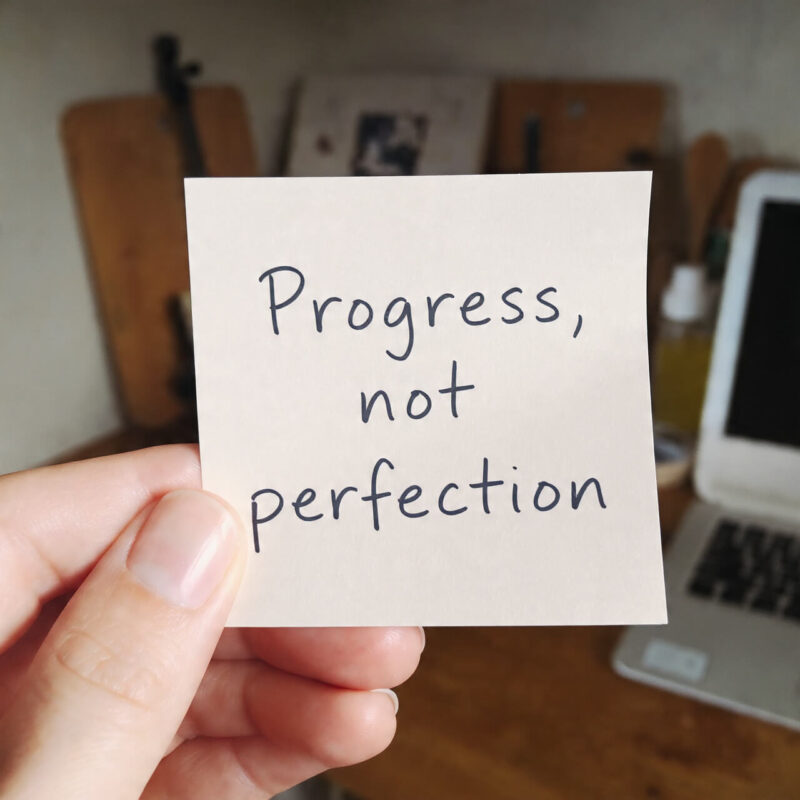
Progress, not perfection. Some days you’ll remember; some days you won’t. Both count. Consistency rewires your brain.
Who Is Mr Critic (and Why Does He Show Up)?
At Everyday Mastery, we call that inner voice Mr Critic — the calm-sounding saboteur who thinks he’s protecting you. Naming him creates distance:
“I’m worthless” becomes “Mr Critic is saying I’m worthless.”
See the shift? One is identity; the other is commentary. That’s power.
Say them out loud, especially when your critic is loudest.
Pair them with small physical cues (like hand on heart or deep breath).
Revisit and adjust as your beliefs shift.
Don’t:
Use affirmations that feel like lies.
Expect instant results.
Criticise yourself for “doing it wrong.”
Compare your progress to anyone else’s.
Everyday Mastery Steps You Can Take Now
Step 1 — Pick Your 3 Affirmations Choose one crisis, one neutral, and one growth statement. Write them somewhere visible.
Step 2 — Create a Daily Anchor Moment Link each affirmation to a real cue: while brushing your teeth, boiling the kettle, or switching off the light. Repetition builds routine without pressure.
Step 3 — Track How Fake It Feels Rate each affirmation 1–10 daily. Watch the number drop week by week. Even one point down means your brain is rewiring.
The smallest step forward is still mastery in action.
Why These Affirmations Work Differently
Traditional affirmations fail because they skip the reality of what you feel. Bridge affirmations work because they:
Meet you where you are.
Acknowledge struggle without shame.
Build on believable truths.
Talk back to the critic instead of drowning it out.
Turn practice into progress.
“The awkwardness is proof you’re creating something new.”
The Self-Love Note Exercise (Take It Deeper)
When affirmations feel abstract, make them tangible. Write a short note to the part of you your critic attacks most. Express appreciation, compassion, and a commitment to treat it kindly.
“Dear Body, thank you for carrying me even when I’m hard on you. You deserve more care than criticism. I’m learning to notice what you do for me instead of what I wish you’d change.”
Keep it somewhere visible. Reread it when Mr Critic gets loud. Cringe if you must — do it anyway. That’s how compassion grows.
Beyond Affirmations: Keep Deepening the Practice
Affirmations are one tool among many. To take the next step:
The goal isn’t to silence your critic — it’s to change how you respond to it. That’s Everyday Mastery.
Journalling Prompts:
Which affirmation resonated most?
What does your critic say most often?
Have you noticed any small wins yet?
We’re building a community of people choosing real self-compassion over fake positivity. Share this post or tag #BridgeAffirmations — your words might help someone else start their own bridge.
About the Author
I’ve been where you are — caught in the critic loop, wondering if peace with my own thoughts was possible. Everyday Mastery began when I realised transformation doesn’t come from giant leaps, but from small, believable steps.
Now I help others rebuild self-trust and calm consistency through practical psychology, mindfulness, and small daily wins.
That’s Everyday Mastery — and it’s available to you, too.
Found this helpful? You can buy me a coffee to support more writing like this. Every cup helps me keep creating resources
Kel is the writer behind Everyday Mastery, where she shares the real, messy, and meaningful process of building habits, resilience, and self-belief from the ground up. Her writing blends ancient philosophy with modern science, always focused on small, practical steps that lead to lasting
Websites store cookies to enhance functionality and personalise your experience. You can manage your preferences, but blocking some cookies may impact site performance and services.
Essential cookies enable basic functions and are necessary for the proper function of the website.
Name
Description
Duration
Cookie Preferences
This cookie is used to store the user's cookie consent preferences.