Crushing Loneliness? A Free practice to Feel Connected Again
Read Time: 12 Mins
Quick Summary: You can be surrounded by people, constantly “connected” online, and still feel painfully alone. This is the story of how volunteer work for loneliness specifically the Buddhist practice of Dana (generous service) helped dissolve that isolation, gave me real human connection, and is available to you right now for free.
……………………..
You’re scrolling through your phone again. Liking posts, watching stories, maybe commenting on something safe and surface-level. You’re “connected” to hundreds of people, but when you put the phone down, the silence feels deafening.
Your circle feels small. The same conversations with the same people about the same things. Everyone around you seems to think the same way, live the same way, worry about the same things. And somewhere underneath it all, there’s this gnawing feeling: Is this it? Is this all there is?
You’re lonely. Not in the “I have no one” way, but in the “I’m surrounded by people and still feel completely alone” way. And that might be even worse.
This is how social media isolation creeps in: your world starts to shrink without you noticing.
We interact with people just like us. Similar backgrounds, similar education levels, similar life circumstances. Our algorithms show us content from people who think like us, neighborhoods cluster people who earn like us. Our social circles reinforce our existing worldview.
Your perspective gets narrower and narrower and our empathy shrinks. Your understanding of human experience becomes smaller, not bigger.
And the loneliness? It deepens. Because surface-level connections the likes, the polite chats and the “how are you?” exchanges where nobody actually answers honestly and don’t feed your soul.
You want real connection. You want to feel part of something, and you want to matter to someone beyond your immediate family or work colleagues.
But you have no idea where to find it. Real human connection needs more than surface-level interaction. It needs presence, depth, and shared humanity.
What Is Dana? The Buddhist Practice Nobody Talks About
Buddhism has a practice called Dana – the practice of generosity, of giving freely without expectation of return.
Most people think Dana means donating money to monks or charitable causes. And yes, that’s part of it. But the deeper Buddhist generosity practice? The one that actually transforms you?
Giving your time. Your presence. Your attention to people who need it.
Not because it looks good on Instagram. Not because you’ll get recognition or thanks or even a warm fuzzy feeling every time. But because it’s one of the most direct paths to breaking the illusion of separation that keeps you isolated and stuck in your own head.
This is the Buddhist compassion practice I stumbled into without even knowing it had a name.
Why Volunteer Work for Loneliness Actually Works (What a Car Park Taught Me)
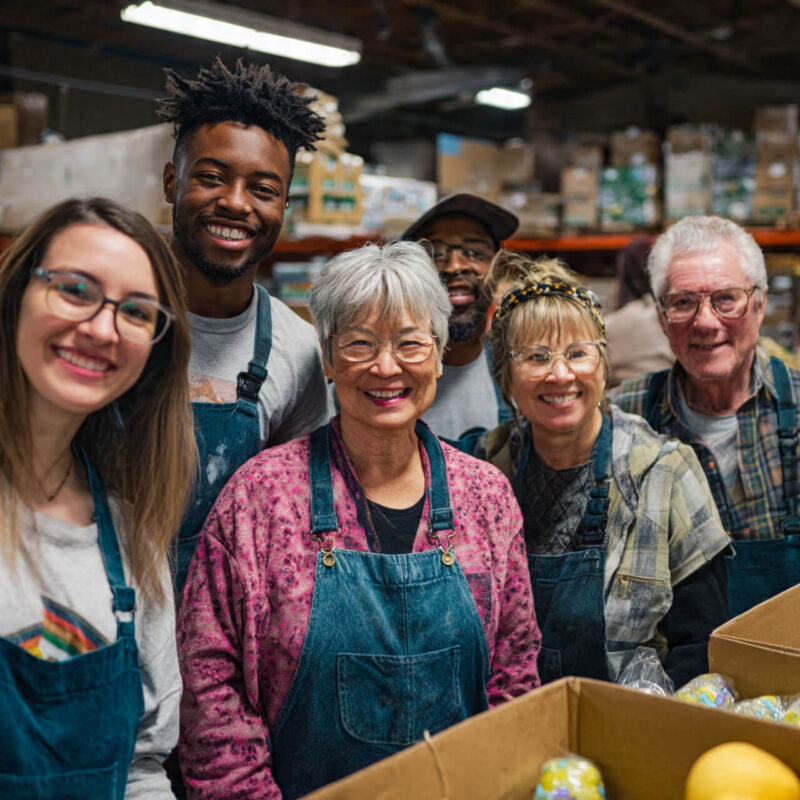
For some years, I volunteered feeding homeless people on a car park. Nothing fancy just showing up, serving food, having conversations with people society mostly pretends don’t exist.
During lockdown, I helped put together food parcels for families struggling to make ends meet. We set up a free food table outside our community shop where anyone could take what they needed, no questions asked.
I didn’t start doing this because I’d read about Dana or Buddhist philosophy. I started because I wanted to help. What I didn’t realize was that I’d stumble into something that would completely shift my perspective on people, on community, and on what actually matters.
The People You Meet When You Step Outside Your Bubble
Volunteering exposed me to people I would never have met through my usual circles or social feeds:
Real conversations with people from completely different backgrounds. Different education levels, different life experiences, different struggles. The businessman who lost everything in a divorce. The young mum fleeing domestic violence. The elderly man whose pension didn’t stretch far enough. The refugee learning English and trying to rebuild.
Every single person had a story. Every single person was more than their circumstances. And every single one of them taught me something about resilience, dignity, and what it means to be human.
A community of beautiful souls I’d never have met otherwise. Some of the most generous, kind, thoughtful people I know now are people I met through volunteering. Not because volunteering attracts saints it doesn’t. But because when you show up consistently to serve alongside others, you build real bonds. Shared generous service created a real, messy, honest community that no algorithm could have curated.
A perspective I couldn’t get any other way. You can read about poverty or homelessness or food insecurity. and watch documentaries, you can feel sympathetic from a distance. But until you sit across from someone who’s choosing between heating and eating, until you hear their story directly from them, until you see their humanity up close – you don’t really understand.
And that understanding? It changes everything.
“Until you sit across from someone and hear their story directly, you don’t really understand. And that understanding changes everything.”
Want more practical wisdom on building connection and meaning? Join the free Everyday Mastery newsletter for weekly insights delivered to your inbox – no overwhelm, just real talk about living intentionally.
How Does Dana Actually Help Loneliness? (The Hidden Gifts of Generous Service)
Buddhism teaches that Dana is a practice of letting go, letting go of attachment, of self-centeredness, of the illusion that you’re separate from everyone else.
In practice, here’s how volunteering benefits mental health and what giving your time freely actually does:
1. It Gets You Out of Your Own Head
When you’re serving others, you stop obsessing about your own problems for a while. Not in a “spiritual bypass” way where you’re avoiding your issues. But in a healthy way where you remember your problems aren’t the only problems in the world.
Your perspective expands and your gratitude deepens. Your own struggles don’t disappear, but they’re easier to hold.
2. It Breaks Down the Barriers You Didn’t Know You Had
Education level? Doesn’t matter when you’re serving soup together. Job title? Irrelevant when you’re packing food parcels side by side. Background? Becomes interesting rather than divisive when you’re actually talking to people as humans, not categories.
You realize how much you’ve been living in a bubble. And once you see it, you can’t unsee it.
3. It Gives You Real Connection (Not Surface-Level Interaction)
There’s something about shared purpose that creates instant community. You’re not performing, and You’re not trying to impress anyone.
Just showing up to do something that matters, alongside other people doing the same thing. And in that shared effort, real friendships form. This is why volunteer work for loneliness is so effective – it creates authentic bonds through shared purpose rather than forced socializing.
The kind of friendships where people actually ask “how are you?” and wait for the real answer.
4. It Reminds You That You Matter
When you’re stuck in isolation, it’s easy to feel invisible. Like you could disappear and nobody would notice.
Volunteering is the antidote to that feeling. Not because people are constantly thanking you (they’re often not). But because you see, directly, that your presence makes a difference. That meal you served? Someone needed it. That food parcel you packed? It fed a family. That conversation you had? It reminded someone they’re seen.
You matter. Not because of what you achieve or produce or earn. But because you showed up.
How to Practice Dana in Everyday Life (Without Overthinking It)
If you’re thinking “this sounds nice but I don’t know where to start,” here’s how:
Find a cause that pulls at your heart. The best volunteer work for loneliness is volunteer work you genuinely care about – homeless services, food banks, elderly care, literacy programs, environmental projects, animal rescue. Don’t pick something because it sounds impressive. Pick something you actually care about. (And if formal volunteering feels like too much right now, even something like joining a walking group can be a gentle way to start building real connection outside your usual bubble.)
Start small. You don’t need to commit to feeding hundreds of people on a car park every week. A few hours a month at a local charity. One shift at a food bank. Showing up to a community cleanup. Small and consistent beats grand and unsustainable every time.
Show up as a learner, not a savior. You’re not there to rescue anyone. You’re there to serve, to learn, to connect. The people you’re helping aren’t projects – they’re humans with dignity and wisdom and stories worth hearing.
Expect it to be messy. Volunteering isn’t always heartwarming. Sometimes it’s frustrating or sad or uncomfortable, and sometimes people aren’t grateful. Organizations are disorganized and you will question if you’re making any difference at all.
Do it anyway. The transformation happens in the showing up, not in the Instagram-worthy moments.
Give it time. The benefits of Dana don’t always show up immediately. You might not feel less lonely after your first shift. But keep going. The connections build. The perspective shifts. The isolation lifts.
The Gift That Goes Both Ways
Here’s what I want you to understand: when you practice Dana when you give your time freely to serve others you think you’re the one giving.
But you receive so much more than you give.
“When you practice Dana, you think you’re the one giving. But you receive so much more than you give.”
You receive perspective. Understanding. Community. Purpose. Connection with beautiful souls you’d never otherwise meet. Freedom from the narrow bubble of your own life and worries.
You receive the reminder that you matter. That showing up makes a difference. That you’re part of something bigger than yourself.
Buddhism teaches that we’re all interconnected. Volunteering doesn’t just teach you this philosophically – it shows you this truth in real, tangible, undeniable ways.
“The stranger becomes a friend. The ‘other’ becomes a fellow human. The isolation dissolves because you remember: we’re all in this together.”
Your Turn: How Volunteering Helps Loneliness
If you’re feeling isolated, stuck in your bubble, craving real human connection – try Dana. Not as a one-off feel-good project, but as a practice.
Find a cause. Show up. Keep showing up. Let the practice change you.
Because if you’re wondering how to stop feeling lonely, the answer isn’t more screen time or more surface-level connections. It’s cured by real human interaction with real humans who live real lives different from yours.
And that? That’s available to you right now. For free. You just have to show up.
Have you ever volunteered? What did it teach you? I’d love to hear your experiences in the comments – because these stories matter.
Journaling Prompts:
What Barriers am I putting up to Genuine Human Connection?
If I could give my time to any cause – what would pull at my heart?
If this post resonated with you, join the free Everyday Mastery newsletter for weekly insights on calm, intentional growth practical wisdom without the overwhelm.
This is your permission slip to start messy. We don’t chase perfect here, we practise progress, because that’s Everyday Mastery.
If you enjoy these posts and want to support the writing, you can buy me a coffee – it keeps the kettle (and the ideas) warm.
Kel is the writer behind Everyday Mastery, where she shares the real, messy, and meaningful process of building habits, resilience, and self-belief from the ground up. Her writing blends ancient philosophy with modern science, always focused on small, practical steps that lead to lasting
Websites store cookies to enhance functionality and personalise your experience. You can manage your preferences, but blocking some cookies may impact site performance and services.
Essential cookies enable basic functions and are necessary for the proper function of the website.
Name
Description
Duration
Cookie Preferences
This cookie is used to store the user's cookie consent preferences.